




 |
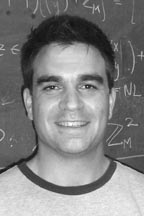
 Research Interests: I study modular forms and their applications to problems relating to algebraic number theory, elliptic curves, L-functions, partitions, and other topics in number theory. |
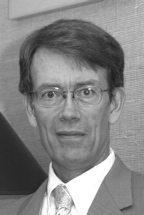 |
 Department of Computer Science and Engineering Research Interests: My interests in number theory are primarily in binary quadratic forms and the class groups of quadratic, cubic, and quartic number fields and in the application of number theory to cryptography and information security. I am also interested in the application of novel computer hardware to computational problems in number theory. |
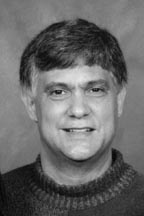 |
 Research Interests: Number Theory, including Analytic, Classical Algebraic, Combinatorial, Computational, Elementary, and Transcedence topics. I have particular interests in results associated with lattice points close to (or on) a curve or surface, the distribution of special sequences of integers in short intervals, applications of Padé approximations to Number Theory, the irreducibility of polynomials over the rationals, and computations with sparse or lacunary polynomials. |
 |
 Research Interests: Various aspects of Analytic and Algebraic Number Theory with particular focus on modern techniques in the distribution of primes and on applications of these techniques beyond their traditional settings. |
 |
 Research Interests: Analytic Number Theory and Approximation Theory with particular interests in the use of finite differences to determine information about lattice points close to a curve or surface. I also have interests in the application of these results to gap problems in Number Theory. |
In addition, there are a variety of other faculty members who have done some research in the area of Number Theory. These include Joshua Cooper, Jerry Griggs, Làszlò Szèkely, and Vladimir Temlyakov.
 |
Last modified on 08/04/11. Please send comments to filaseta@math.sc.edu |